Our Location
Room 1287, Yinzhushan Road,Huangdao, Qingdao, China

Room 1287, Yinzhushan Road,Huangdao, Qingdao, China

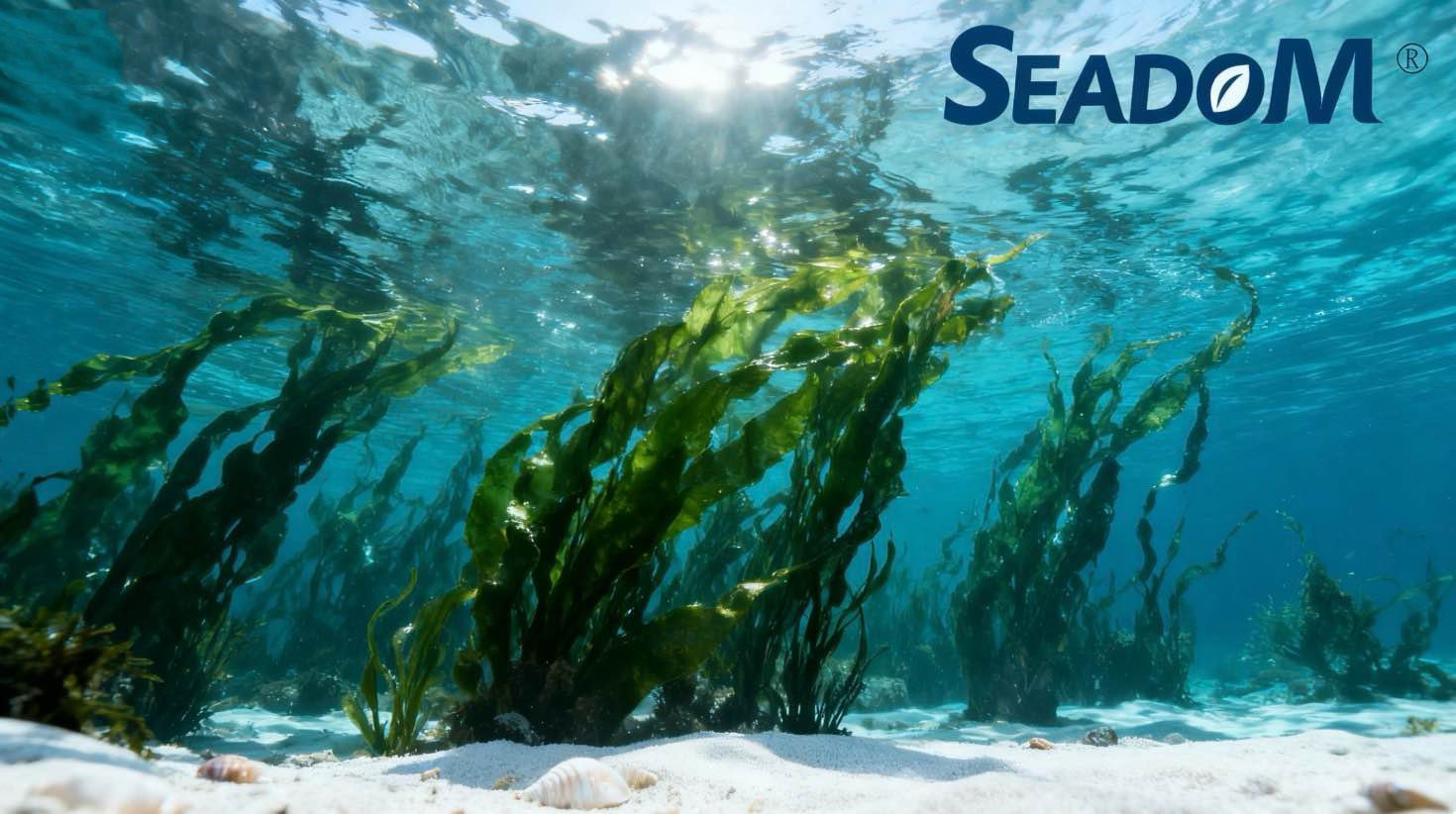
Seaweed fertilizer has a long history, and its excellent efficacy has been proven in agriculture, horticulture, and floriculture. As global demands for food quantity and quality rise, while challenges like climate change and soil salinization emerge, seaweed fertilizer gains new development opportunities. Looking to the future, its unique efficacy will play a vital role in green agriculture in the 21st century. In this process, the variety, quality, and application research of seaweed fertilizer will further expand and improve. Especially with a deeper understanding of its mechanism, progress in formula, application methods, and controlled release of active ingredients will drive its development. Worldwide scientific research and practice show seaweed fertilizer benefits crop growth in aspects like improving germination, promoting root development and mineral absorption, enhancing shoot growth and photosynthesis, boosting crop nutrition and health, increasing yield, and improving produce quality. Compared with traditional and other new fertilizers, seaweed fertilizer has advantages as follows.
Seaweed fertilizer, refined from marine biological materials through advanced processes like grinding, curing, fermentation, and chelation, is a pollution-free and harmless pure natural bio-organic fertilizer.
It is a natural soil amendment. The alginic acid it contains is a soil-regulating substance, which not only doesn’t produce pollution sources but also can repair polluted soil and prevent soil deterioration.
It promotes the formation of soil granular structure, increases beneficial microorganisms and biological activity in the soil. Its active substances like polysaccharides and polyphenols can improve soil structure, enhance soil air permeability and water retention. After application, it can effectively solve soil salinization and compaction problems. It can also be compounded with chemical fertilizers into organic-inorganic compound fertilizers to enhance fertilizer efficiency.
The core nutrient element is alginic acid, a pure natural seaweed extract. After special processing, the essence extracted from seaweed largely retains various natural active ingredients that promote plant growth.
Nutrient elements in seaweed fertilizer are easily absorbed by plants and can enter plant bodies within 2 – 3 hours after application.
It can significantly promote crop root development, improve photosynthesis, strengthen plants, improve crop quality, enhance disease, cold, and drought resistance, and promote early fruit ripening.
It can interact harmoniously with plant and soil ecosystems, facilitate root growth, and effectively improve crop stress resistance.
Containing more than 60 effective ingredients and active substances, it can help plants establish a robust root system, enhance their absorption of soil nutrients, water, and gas, accelerate plant cell division, and delay cell senescence, so it has huge development potential in modern agricultural production.
In actual production, seaweed fertilizer made from large seaweeds acts as an agricultural biostimulant, whose main active ingredients are various plant growth regulators derived from seaweed. In general, seaweed fertilizer has the following effects:
(1) Promote rhizobacteria;
(2) Suppression of soil borne disease and nematodes;
(3) Promote healthy root growth;
(4) Improve germination rates;
(5) Improve nodulation;
(6) Minimize effect of heat and frost;
(7) Strengthen cell walls against insect and fungal attack;
(8) Promote budding and flowering;
(9) Improve root crop quality;
(10) Increase quality, size, taste and yield.
#SeaweedFertilizer #Agriculture #Horticulture #CropQuality #SustainableFarming