Our Location
Room 1287, Yinzhushan Road,Huangdao, Qingdao, China

Room 1287, Yinzhushan Road,Huangdao, Qingdao, China

Seaweed Extract – Natural Plant Growth Booster & Organic Fertilizer
Discover the power of Seaweed Extract, a premium natural solution designed to enhance plant growth, improve soil health, and boost crop productivity. Derived from high-quality seaweeds, this organic fertilizer and water-soluble biostimulant is rich in essential nutrients, plant hormones, and bioactive compounds, making it the ideal choice for farmers, gardeners, and horticulturists seeking healthier, more resilient plants.
Nutrient-Rich Composition
Our seaweed extract is formulated to provide a balanced supply of nutrients for optimum plant performance:
Seaweed Polysaccharides ≥30–60% – Support cell growth, strengthen plant tissues, and enhance resistance to environmental stress.
Alginic Acid ≥18–35% – Improves soil structure, increases water retention, and promotes robust root development.
Organic Matter ≥40–45% – Enriches soil fertility, stimulates beneficial microbial activity, and improves nutrient availability.
Total Nitrogen (N) ≥1.5–7% & Potassium (K₂O) ≥16–20% – Provide essential nutrition for vigorous growth, flowering, and fruiting.
Mannitol, Amino Acids, and Microelements – Boost plant metabolism, enhance nutrient absorption, and support overall plant vitality.
With 100% water solubility, low moisture (≤10%), and a balanced pH of 5.0–8.0, this seaweed extract powder or liquid is easy to apply and ensures rapid nutrient uptake by plants.
Benefits for Agriculture & Horticulture
Our Seaweed Extract is a versatile plant growth enhancer and soil conditioner, offering numerous benefits:
Promotes Root Development – Encourages strong, deep roots for improved water and nutrient absorption.
Enhances Nutrient Uptake – Makes essential minerals more available to plants, boosting growth and yield.
Increases Stress Resistance – Protects plants from drought, cold, salinity, and disease.
Improves Soil Structure – Stimulates microbial activity, enhances water-holding capacity, and enriches soil fertility.
Boosts Crop Quality & Yield – Supports lush foliage, vibrant flowers, and high-quality fruits and vegetables.
Ideal for vegetables, fruits, grains, flowers, and ornamental plants, it works effectively in greenhouses, open fields, and hydroponic systems.
Easy Application & Water-Soluble Formula
This organic fertilizer can be applied in multiple ways:
Foliar Spray: Apply directly to leaves for fast nutrient absorption and visible growth benefits.
Soil Drenching: Mix with water and apply to the root zone to strengthen roots and improve nutrient uptake.
Hydroponic Systems: Easily integrated into nutrient solutions for soilless cultivation.
Its water-soluble formulation ensures even distribution and consistent results, making it suitable for both professional agriculture and home gardening.
Why Choose Our Seaweed Extract?
High Purity & Natural Extraction – Sourced from premium seaweeds to retain active bio-compounds.
Eco-Friendly & Organic – Safe for sustainable farming practices and environmentally responsible cultivation.
Versatile & Effective – Functions as a plant growth booster, root enhancer, soil conditioner, and organic fertilizer.
Improves Growth & Productivity – Promotes healthy roots, strong plants, and higher crop yields.
Invest in our Seaweed Extract today and give your crops, gardens, or horticultural projects the natural boost they need. Experience healthier plants, fertile soil, and higher yields with every
This range covers our solid seaweed extract grades: three physical forms (flake, powder and granule) plus three fortified variants that add micronutrients, protein or a balanced NPK background. All are water-soluble, made from Ascophyllum nodosum harvested in Quebec, and applied by foliar spray, drip irrigation or direct soil application.

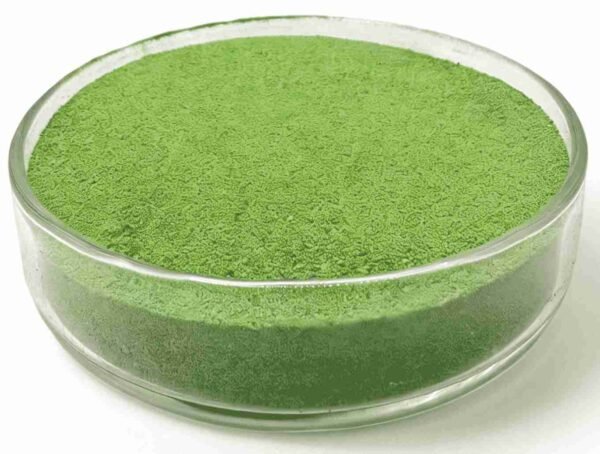
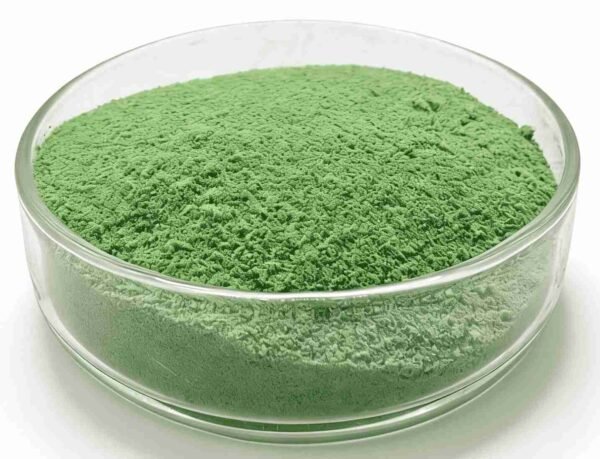


The active fraction in every grade on this page is the same — alginic acid, mannitol, natural plant hormones and the mineral background of the seaweed itself. What changes between forms is how fast the material dissolves, how much of it reaches the soil rather than the leaf, and how it behaves in a tank or a fertigation line. That is usually the deciding factor, not the headline percentage.
| Grade | Form | Alginic acid | K2O | Plant hormones | Where it fits |
|---|---|---|---|---|---|
| Seaweed extract flake | Flake | ≥ 18% | ≥ 16% | 300 ppm | Lowest alginic content of the three solids; the economical base for a spray programme |
| Seaweed extract powder | Ultra-fine powder | ≥ 18% (Content I) ≥ 25% (Content II) | ≥ 16% ≥ 20% | 300 ppm 600 ppm | Dissolves completely — drip, hydroponics, seed treatment, cosmetic use |
| Seaweed extract granules | Granule | ≥ 25% (Content I) ≥ 35% (Content II) | ≥ 20% ≥ 18% | 600 ppm 700 ppm | Highest alginic content; slowest to dissolve, strongest soil-conditioning effect |
Two practical consequences follow from that table. First, flake and granules are not interchangeable even though both are sold as solids: a granule releases over a longer window, which is what you want when the target is the root zone, and what you do not want when you need a clean spray solution within minutes. Second, the powder page carries two declared grades under one product, so a buyer specifying “powder” should state which content is required rather than leaving it to the supplier.
The fortified products exist because most deficiency and quality problems in the field are not solved by more seaweed. They are solved by putting a specific fraction next to the seaweed so the two are delivered together.
A formulator choosing between them is really choosing what the crop is short of. Where a leaf test shows a trace-element gap, the micronutrient type addresses it directly. Where the limitation is vegetative vigour before flowering, the protein type carries the nitrogen. Where the goal is fruit fill and appearance in the last weeks before harvest, the green NPK type is the one built for that window.
Every number on this page is a declared minimum, not a typical analysis and not a guarantee of a field result. Three details matter when you compare our sheet with another supplier’s:
All three forms can be applied as a foliar spray, through root irrigation, or directly to soil. The route decides the grade more often than the crop does: a hydroponic operation needs the fully dissolving powder, a plantation top-dressing needs granules for release over time, and a knapsack spray programme is usually best served by flake on cost per hectare. For the agronomy behind it — what each active fraction does inside the plant — see the active ingredients guide; for what has actually been measured in trials and what has not, see the application efficacy guide.
Classifying a seaweed extract correctly depends on the destination market, the application route and the specification your customer has already set. An enquiry that includes the form, the declared content required, the annual volume and the destination port usually gets a workable answer in the first reply. Batch certificates of analysis are issued with each shipment; if you need to check a declared value against your own purchase specification before ordering, ask for the batch COA and it will be sent with the quotation.
Seadom has manufactured seaweed extract from Quebec Ascophyllum nodosum for more than 35 years using an enzymatic hydrolysis process, and exports to more than 40 countries.