Our Location
Room 1287, Yinzhushan Road,Huangdao, Qingdao, China

Room 1287, Yinzhushan Road,Huangdao, Qingdao, China

Seaweed fertilizer stimulates root growth—especially in the early stages of plant development. When wheat was treated with seaweed fertilizer, the dry weight ratio of roots to shoots increased, proving its active organic compounds (not inorganic components) drive root growth (Finnie, 1985; grayed seaweed fertilizer lost this effect). This benefit is seen in both base fertilizer and foliar application (Biddington, 1983).
Concentration matters: A high 1:100 seaweed extract-to-water ratio inhibited tomato root growth, while a diluted 1:600 ratio promoted it (Finnie & van Staden, 1985). Its key active ingredient—endogenous auxins—improves lateral root formation and nutrient/water absorption efficiency, enhancing plant vitality (Crouch, 1990, 1992; Atzmon, 1994). It also boosts root growth, increases seedling root count, and reduces mechanical damage in crops like corn, cabbage, tomatoes, and marigolds.
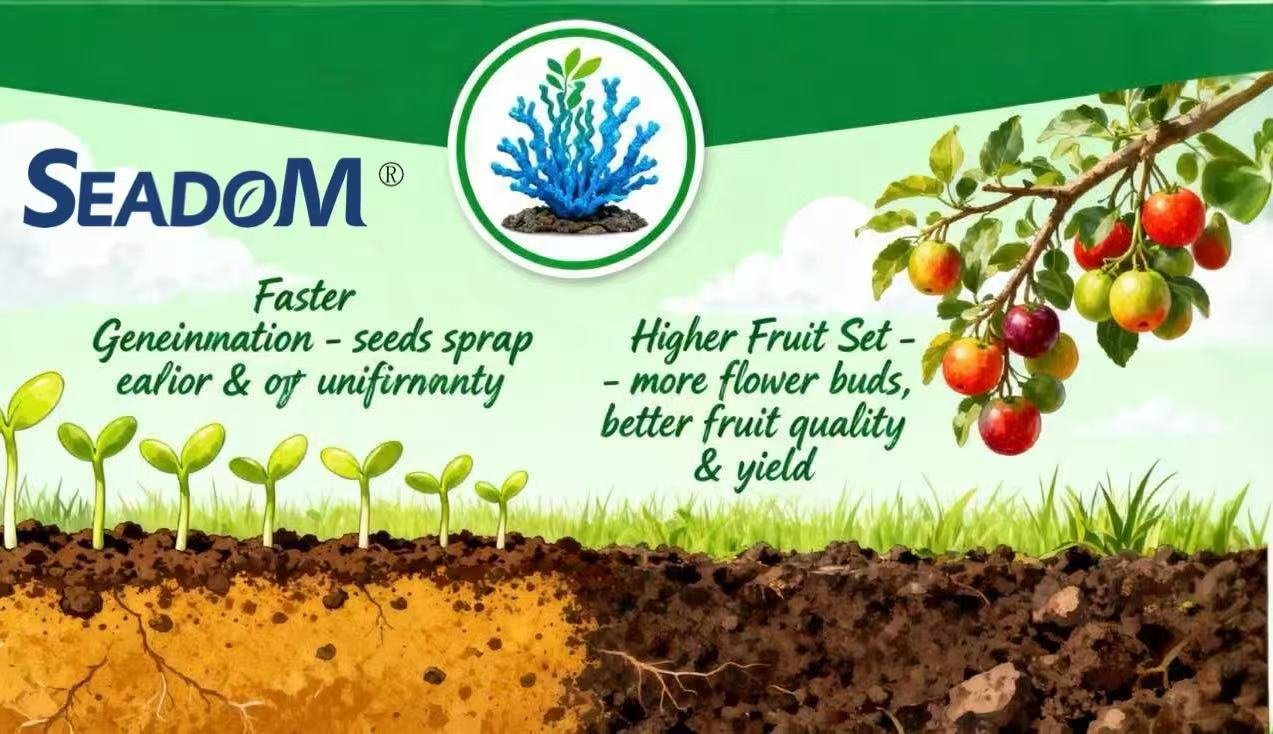
For seed germination: Soaking tomato seeds in 500x-diluted liquid seaweed fertilizer for 12 hours accelerated germination by 2–3 days, improved germination rate, and ensured uniform sprouting (Wang Qiang, 2003).
Seaweed extract increases chlorophyll content in plants (Blunden, 1997). Low-concentration Ascophyllum nodosum extract (applied to tomato soil or foliage) reduced chlorophyll degradation via betaines, boosting chlorophyll levels (Whapham, 1993). While seaweed fertilizer doesn’t provide all nutrients, it improves nutrient absorption by roots and leaves (Schmidt, 20XX; Vernieri, 2005; Mancuso, 2006).
Alginate oligosaccharides (low-molecular-weight sugars from alginate degradation) regulate plant growth and photosynthesis. Foliar spraying of 0.5mg/g alginate oligosaccharides increased tobacco seedling height, leaf area, and chlorophyll content by adjusting stomatal conductance and intercellular CO₂ concentration.
Glycine betaine in seaweed extract maintains chloroplast photosynthetic activity in vitro. Soil drenching with Ascophyllum nodosum extract increased chlorophyll in dwarf French beans, barley, corn, and wheat (Blunden, 1986). For tomatoes, foliar spraying 300x-diluted liquid seaweed fertilizer at the seedling and pre-flowering stages optimized chlorophyll levels (Wang Qiang, 2003). In Australia, giant kelp-based seaweed fertilizer increased broccoli seedling leaf count (+6%), stem diameter (+10%), and leaf area (+9%) (Arioli, 2015).
Seeds treated with seaweed extract have faster respiration and higher germination rates:
1984 tests by University of Cape Town horticulturists (South Africa) confirmed seaweed fertilizer boosts flower bud count by 30–60% and advances flowering. For apples, it thickens leaves, deepens leaf color, and promotes short branch formation—stimulating flower bud differentiation and higher fruit set.
Seaweed extract advances flowering and boosts fruit set. For example, treated tomato seedlings flowered earlier (a non-stress response). Its cytokinins (plant growth regulators) drive nutrient transport from vegetative organs (roots, stems, young leaves) to developing fruit, supporting fruit growth.
Greenhouse trials showed:
Abiotic stresses (drought, low temperatures) disrupt crop growth and yield by altering cell osmotic pressure and accumulating reactive oxygen species (ROS) that damage DNA, lipids, and proteins (Wang, 2003; Mittler, 2002; Arora, 2002). Seaweed fertilizer improves stress resistance in vegetables like eggplants, rapeseed, cucumbers, cabbage, celery, carrots, tomatoes, and peppers.
Field tests:
Betaines (and derivatives) in Ascophyllum nodosum extract also play a role: Crops treated with seaweed fertilizer or pure betaines had similar chlorophyll levels (27.73/26.48 SPAD vs. 27.30/23.60 SPAD at 63/69 days)—both far higher than controls (Blunden, 1997). Treated plants also showed salt and cold tolerance (Mancuso, 2006).
Other mechanisms:
Seaweed extract advances vegetable harvest by 6–14 days (varied by crop):
#SeaweedScience #BioactiveFertilizers #SustainableFarming #CropHealth#SustainableAgriculture#RegenerativeFarming#PlantNutrition#SeaweedFertilizer#GreenTech#Seaweed#Seaweedextract#Biostimulant#QINGDAOSEADOM