Our Location
Room 1287, Yinzhushan Road,Huangdao, Qingdao, China

Room 1287, Yinzhushan Road,Huangdao, Qingdao, China

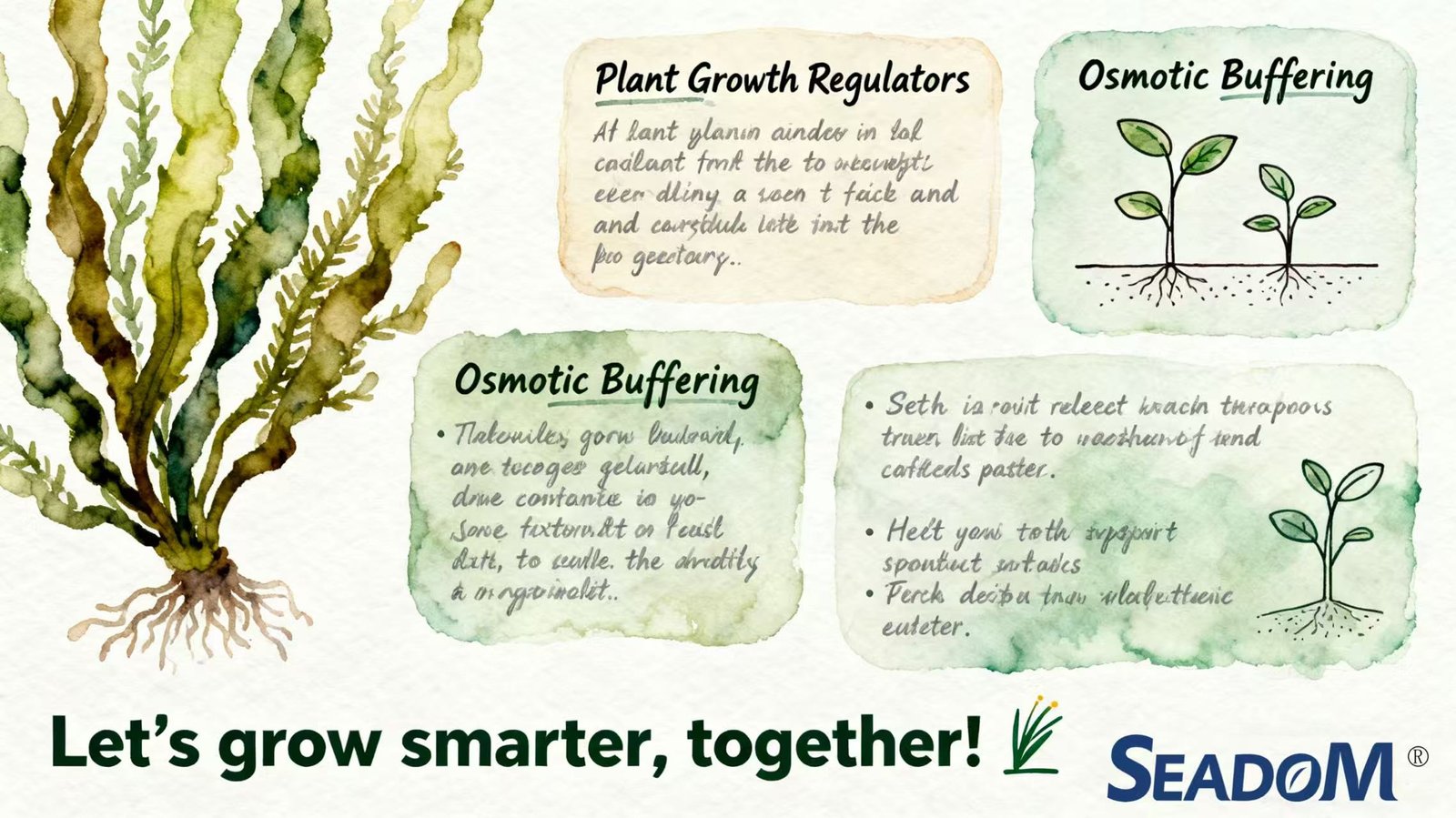
While seaweed fertilizer’s benefits in agriculture are proven, its exact mechanisms are still being explored. Here’s what science has uncovered so far :
Seaweed extracts contain a suite of natural PGRs: auxins, cytokinins, gibberellins, and abscisic acid. Early studies compared their growth-promoting effects to known synthetic PGRs. For example:
Quaternary ammonium molecules like betaines and proline act as osmotic regulators. They help plants tolerate stress by stabilizing cell osmotic pressure—and their levels increase as stress intensifies . Betaines are found in brown algae like Ascophyllum nodosum, Fucus, and kelp.
Seaweed polysaccharides (including sulfated ones like alginates) play multiple roles:
Minerals, micronutrients (Mn, Zn, Fe, etc.), and sterols (lipid molecules) enhance nutrient uptake and support plant growth. Seaweed extracts also contain hundreds of other plant-active molecules—their full impact needs more research. Bioinformatics studies show hundreds of plant genes respond to seaweed fertilizer components.
To decode how seaweed extracts work, new automated phenotyping systems are used. These systems track plant traits (like root/shoot growth) with high-resolution imaging and data integration. For example:
Seaweed extracts vary by species, extraction methods, and stability. Their effectiveness also depends on application timing, frequency, and plant growth stage. More research is needed to define optimal usage practices—maximizing both agricultural efficiency and economic returns.
#SeaweedFertilizer #AgriculturalScience #CropMechanisms #SustainableFarmingSeaweedScience #BioactiveFertilizers #SustainableFarming#CropHealth#SustainableAgriculture#RegenerativeFarming#PlantNutrition#SeaweedFertilizer#GreenTech#Seaweed#Seaweedextract#Biostimulant#QINGDAOSEADOM