Our Location
Room 1287, Yinzhushan Road,Huangdao, Qingdao, China

Room 1287, Yinzhushan Road,Huangdao, Qingdao, China

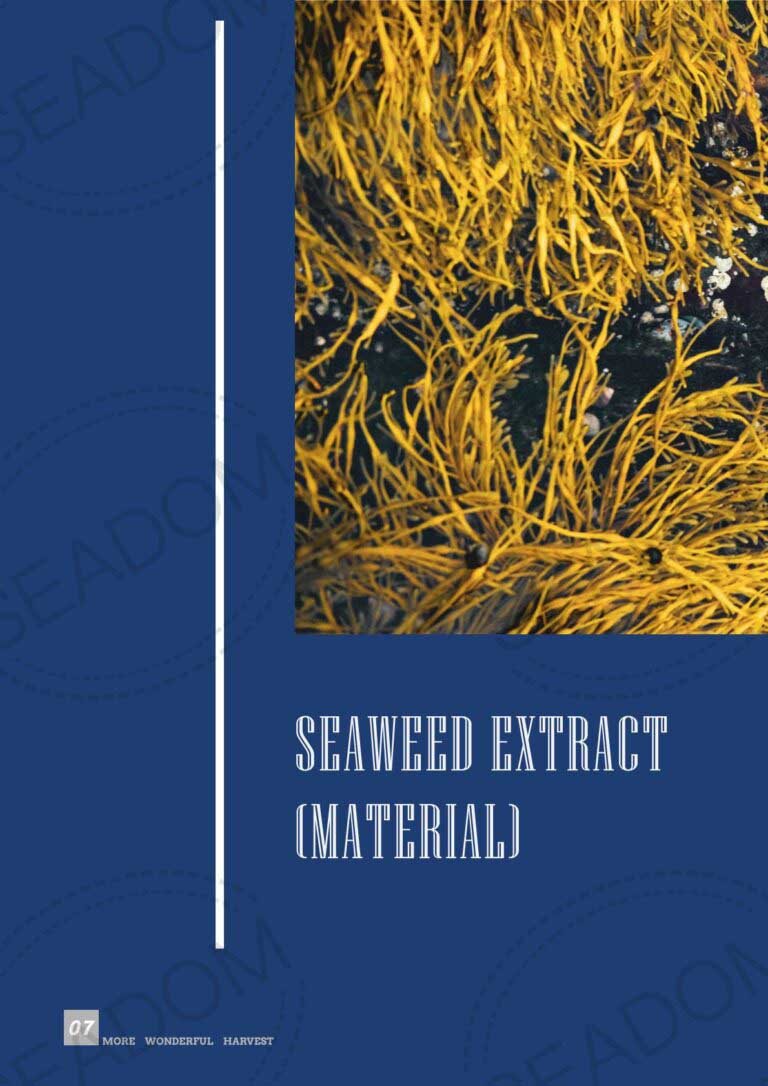
The agricultural input market now offers a diverse range of seaweed fertilizers. Based on nutrient ratios, physical forms, and added ingredients, they can be categorized into the following main types:
🔢 Nutrient-Ratio Based
Formulated with nutrients essential for plants (as liquids or powders), these are classified by function:
General-purpose, high-nitrogen, high-potassium, anti-freezing, root-promoting, leaf-protecting, flowering-promoting, disease-resistant, growth-regulating, and medium/trace element formulas.
📦 Physical Form Based
Liquid: E.g., foliar sprays, fertigation solutions.
Solid: E.g., powdered foliar fertilizers, powdered fertigation products, granular seaweed fertilizers.
Less common: Suspensions and pastes.
➕ Added Active Ingredients Based
Variants include seaweed fertilizers enriched with:
Humic acid, amino acids, chitosan, or rare earth elements.
🦠 Seaweed Microbial Fertilizers
Produced via microbial fermentation of:
Whole seaweed or residues from extracting seaweed active substances.
🌱 Application Method Based
Foliar fertilizers: For leaf spraying.
Fertigation products: For shallow root zone application.
Seed soaking/dressing & root dipping: Dilute seaweed fertilizer to soak seeds, dress them, or dip seedlings/cuttings before transplanting/cutting.
🌾 Seaweed Bio-organic & Compound Fertilizers
Seaweed bio-organic fertilizers (combining seaweed with organic matter).
Organic-inorganic compound fertilizers (integrating seaweed into mixed formulations).
⚖️ Seaweed Content Based
Main raw material: Seaweed/seaweed active substances.
Main additive: Seaweed/seaweed active substances (added as supplements).
Understanding these categories helps tailor seaweed fertilizer use to specific crop needs—let’s innovate smarter ag solutions! 🌿