Our Location
Room 1287, Yinzhushan Road,Huangdao, Qingdao, China

Room 1287, Yinzhushan Road,Huangdao, Qingdao, China

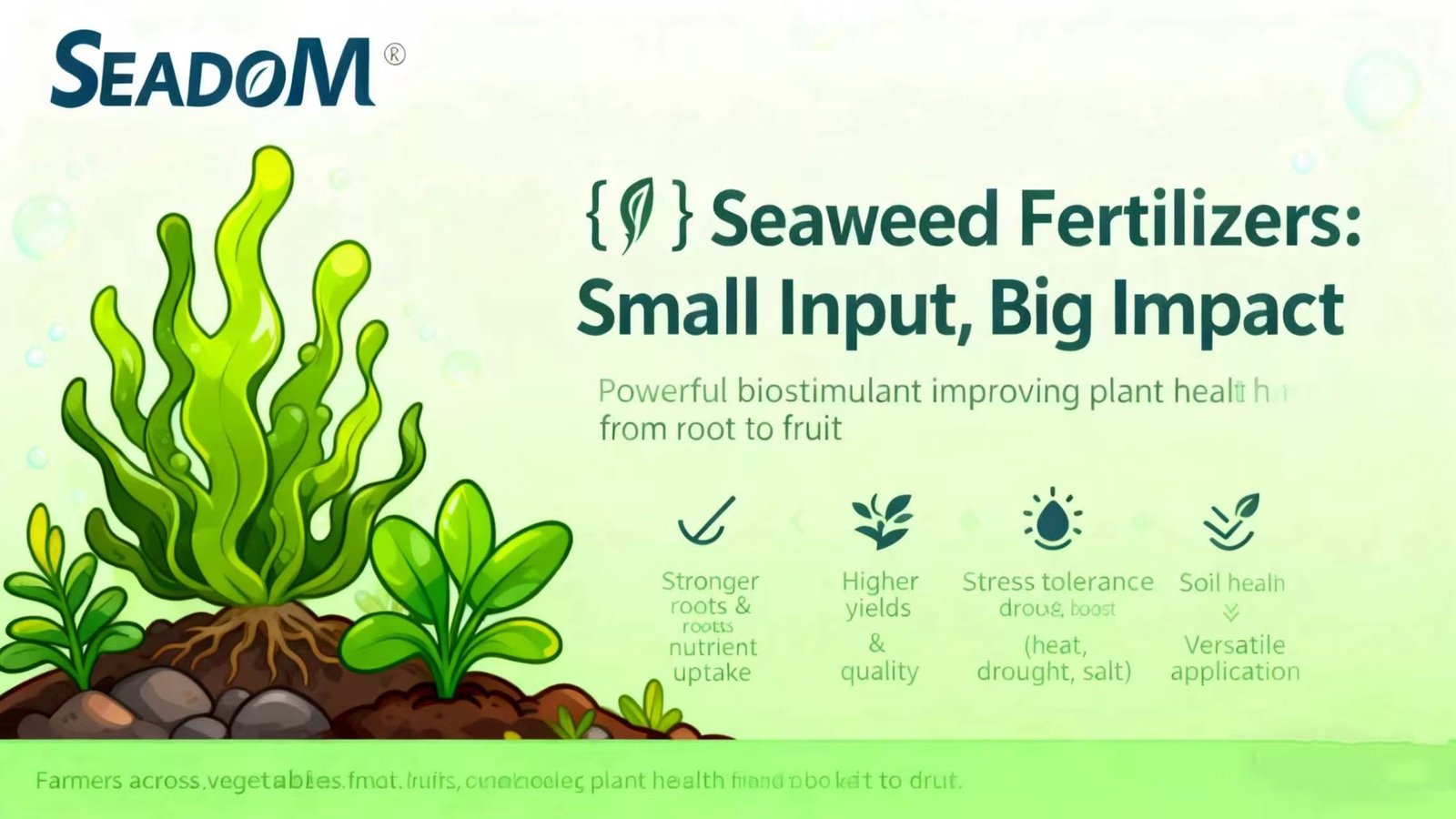
Seaweed fertilizers are widely used across modern agriculture, including field crops, oilseed crops, vegetables, fruit trees, seed treatments, soil improvement, foliar applications, hydroponics, plant growth regulation, and nematode control. Below is a structured technical overview.
Seed priming is a pre-sowing hydration technique that allows seeds to absorb water and reach advanced metabolic activity before germination.
When used at low concentrations, seaweed extracts:
Soil amendments such as compost, humic substances, microorganisms, and seaweed extracts improve soil structure and biological activity.
Key findings:
Applications in field trials showed:
Foliar spraying is one of the most common usage methods for seaweed fertilizer.
Benefits observed in grapes, watermelon, strawberries, tomato, apple, beans, onion, carrot, okra, potato, wheat, maize, and more:
In hydroponic systems, crops rely entirely on nutrient solutions. Seaweed fertilizers naturally provide:
These improve nutrient uptake, plant vigor, and overall root-zone conditions in hydroponic and substrate-based systems.
Crops are highly sensitive to environmental stresses such as heat, drought, and salinity.
Seaweed extracts demonstrate strong biostimulant activity:
Research findings:
These improvements are linked to natural auxin-like and cytokinin-like compounds in seaweed.
Seaweed fertilizers show strong potential in reducing root-knot nematode damage.
Effects include:
Soil-drench applications significantly improved tomato and barley performance under nematode pressure.