Our Location
Room 1287, Yinzhushan Road,Huangdao, Qingdao, China

Room 1287, Yinzhushan Road,Huangdao, Qingdao, China

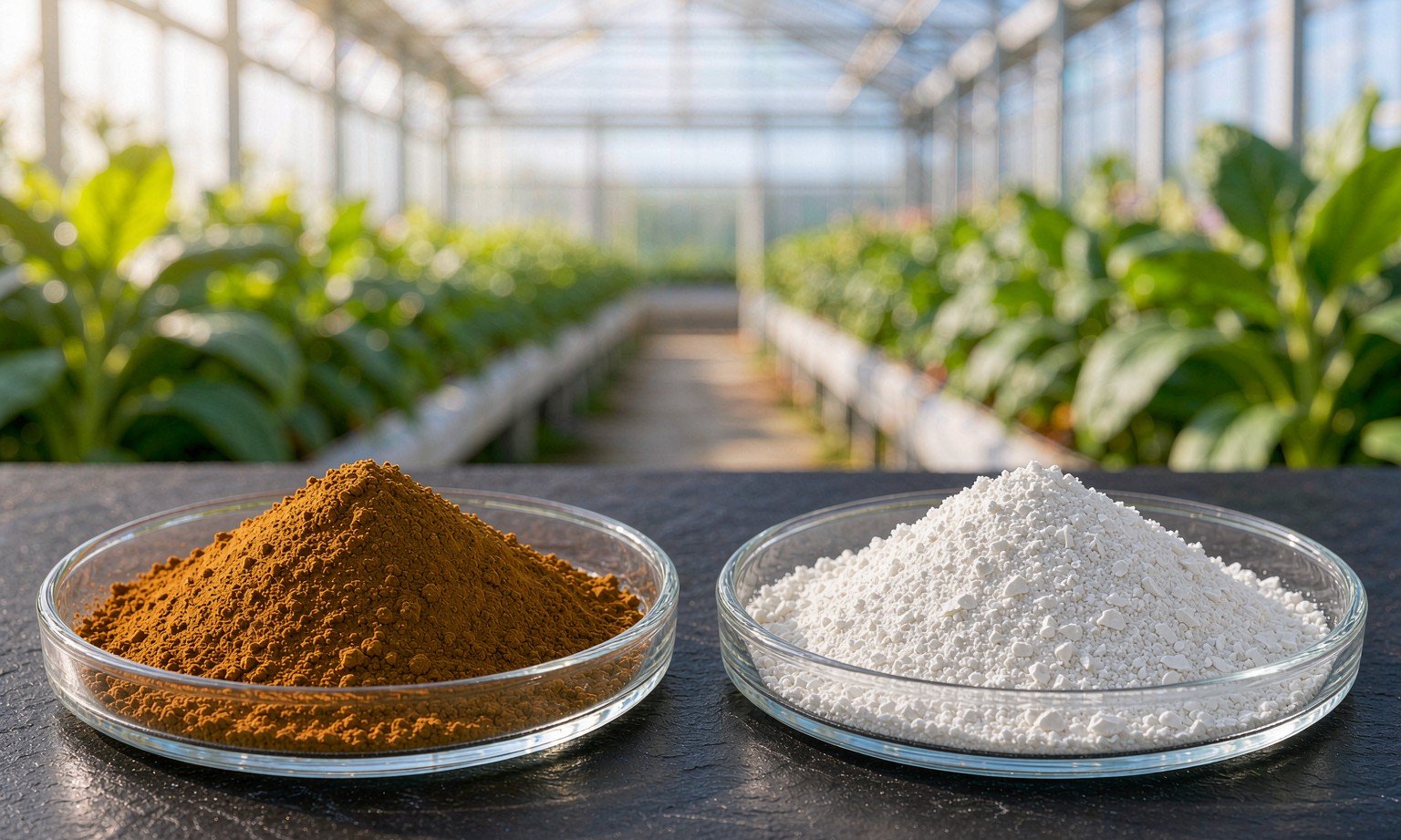
Importers and distributors searching for a fulvic amino acid fertilizer often find the two ingredients sold separately, blended together, or used as marketing shorthand for one another. They are not the same product, and they do not do the same job in the field. Fulvic acid works mainly in the root zone, keeping nutrients mobile and available for uptake. Amino acids work inside the plant, supplying the building blocks for growth and helping crops recover from stress. Understanding the difference helps you stock the right grades for the right customers — and quote specifications with confidence.
Fulvic acid is a low-molecular-weight, carbon-based compound that forms naturally as organic matter breaks down. Its small molecule size and its ability to act as a natural chelator are what make it useful in fertilizer programmes: it binds to nutrients in the soil solution and holds them in a form roots can absorb more easily.
In practical terms, growers use fulvic acid to improve nutrient efficiency rather than to feed the crop directly. A good fulvic grade also improves soil structure over time — raising cation exchange capacity, supporting water retention, and encouraging beneficial soil microbes. Typical declared specs for a commercial fulvic acid powder are a fulvic acid content of ≥90%, 100% water solubility, and a pH around 4.0–5.0, applied by soil drench, irrigation systems, or foliar spray. You can see how we declare these figures on our fulvic acid powder product page.
Amino acids are the building blocks of proteins. When supplied as a water-soluble fertilizer, they give the crop a ready source of organic nitrogen and small molecules the plant can take up directly — without first spending energy to reduce nitrate or synthesize them from scratch.
That is why amino acid fertilizers are associated with faster recovery after transplanting, frost, or salinity stress, and with better flowering and fruit set when the crop is under load. Commercial grades are usually declared by total amino acid and free amino acid content. For example, our amino acid fertilizer comes in two concentrations — Total Amino Acid ≥40% or ≥85%, with free amino acid from ≥35% up to ≥80% and organic nitrogen from ≥7% to ≥13% — so distributors can match the grade to the price point of their market.
The two ingredients overlap in one respect — both are carbon-based biostimulant materials that improve how efficiently a crop uses nutrients — but they differ in where they act and what they deliver:
| Fulvic acid | Amino acid | |
|---|---|---|
| Main role | Chelates and mobilises nutrients in the root zone | Supplies organic nitrogen and protein building blocks |
| Where it acts | Mainly soil and root uptake | Mainly inside plant metabolism |
| Typical form | Water-soluble powder or flakes | Water-soluble powder, flakes or granules |
| Key declared specs | Fulvic acid content, pH, solubility | Total / free amino acid, organic nitrogen |
| Best known for | Nutrient efficiency, soil structure, microbial activity | Stress recovery, root development, crop quality |
Because the mechanisms do not compete, the two are complementary. A crop programme that uses fulvic acid to keep nutrients available and amino acids to support growth phases gets more out of the same NPK input.
Yes — and this is exactly why many buyers ask for a combined fulvic amino acid fertilizer rather than two separate products. Both materials are water soluble and stable in similar pH ranges, so they can be applied in the same tank mix or supplied as a pre-blended grade. For a distributor, the choice is commercial as much as agronomic: separate grades let growers dose each input independently, while a blended grade simplifies logistics and is easier to position to smaller growers who want one product instead of two. Many importers start with both grades in the portfolio and let the market decide.
The right specification depends less on the ingredient and more on what your customers are trying to fix:
If you are building a biostimulant portfolio rather than buying a single input, it helps to read the two ingredient families side by side. Our guide to seaweed fertilizer active ingredients explains how these compounds fit into a wider programme, and our fulvic acid, fish protein and amino acid category lists the grades most buyers pair together.
Whatever grade you source — from us or from any supplier — confirm the same basics on the spec sheet: the declared content of the active fraction (fulvic acid percentage, or total and free amino acids), 100% water solubility if the material will go through irrigation or spray systems, the pH range, and moisture content for storage stability. Ask for batch specifications with each shipment, and make sure the declared figures on the label match the technical data sheet. Clear specifications are the difference between a repeat order and a dispute, and a manufacturer that publishes its declared values openly is the safest place to start.
Working on a fulvic or amino acid sourcing programme? Seadom has manufactured water-soluble biostimulant fertilizers for over 35 years, exporting to buyers in more than 40 countries with an annual capacity of 3,000–5,000 tonnes. Tell us the specs and volumes you need and we will quote the matching grade.
Water-soluble powders in this family are hygroscopic to varying degrees, so storage matters as much as specification: keep bags sealed in a cool, dry place, and rotate stock so that opened material is used first. Before the first field application, run a small-volume solubility check with the actual water source the grower will use — water hardness varies by region and affects how quickly any of these materials go into solution. And when a tank will carry more than one input, check compatibility with the rest of the programme, especially calcium-containing fertilizers, before mixing at full rate. Five minutes of jar testing protects both the crop and the customer relationship.