Our Location
Room 1287, Yinzhushan Road,Huangdao, Qingdao, China

Room 1287, Yinzhushan Road,Huangdao, Qingdao, China

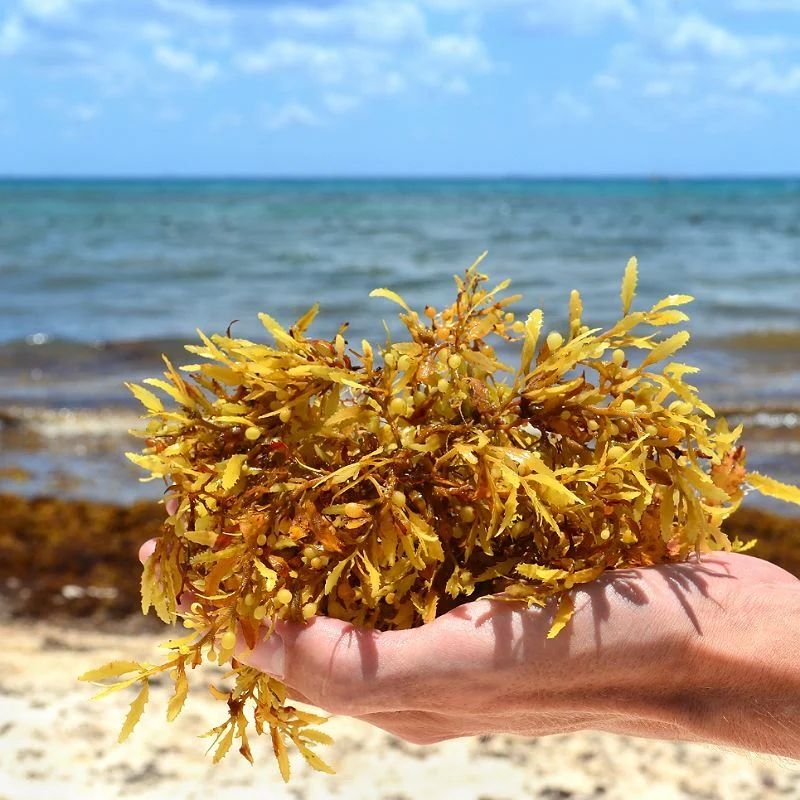
🌿 Sargassum sp., a brown alga belonging to the Phaeophyta phylum, Fucales order, Sargassaceae family, and Sargassum genus, is an emerging raw material for producing seaweed fertilizers. These large brown algae are commonly found in coastal areas of tropical and temperate seas, mostly growing below the low-tide zone with heights often exceeding 1 meter. As a key component of seaweed beds, their thalli are yellowish-brown, with structures resembling leaves and stems: stems are slightly triangular, leaves are mostly lanceolate, and they feature air bladders for buoyancy.
🌊 Distribution & Diversity
Predominantly warm-water species, Sargassum thrives in tropical and subtropical seas like the Indo-West Pacific, Australia, and the Caribbean. With a staggering 878 recorded species, varieties, and forms (340 confirmed to exist), this genus showcases remarkable biodiversity, adapting to diverse marine environments.
🌱 Ecological & Industrial Value
In natural waters, Sargassum serves as a vital food source for purple sea urchins, abalone, and other marine organisms. When processed into seaweed fertilizer, it not only replaces some grain-based nutrients and mineral trace elements but also promotes broiler chicken growth. Rich in bioactive compounds like unsaturated fatty acids, iodine, dietary fiber, laminarin, minerals, vitamins, and essential amino acids, it’s a premium raw material for health foods and pharmaceuticals.
🌍 The Legendary Sargasso Sea
The “Sea of Grass” mentioned by the ancient Greek Aristotle over 2,000 years ago—famously the same sea where Columbus was trapped for over a month in 1492—holds the world’s richest Sargassum resources. Spanning 5 to 6 million square kilometers between 20°N–35°N latitude and 35°W–70°W longitude, this marine ecosystem, known as the Sargasso Sea, stands as a testament to the fascinating intersection of nature and maritime history.