Our Location
Room 1287, Yinzhushan Road,Huangdao, Qingdao, China

Room 1287, Yinzhushan Road,Huangdao, Qingdao, China

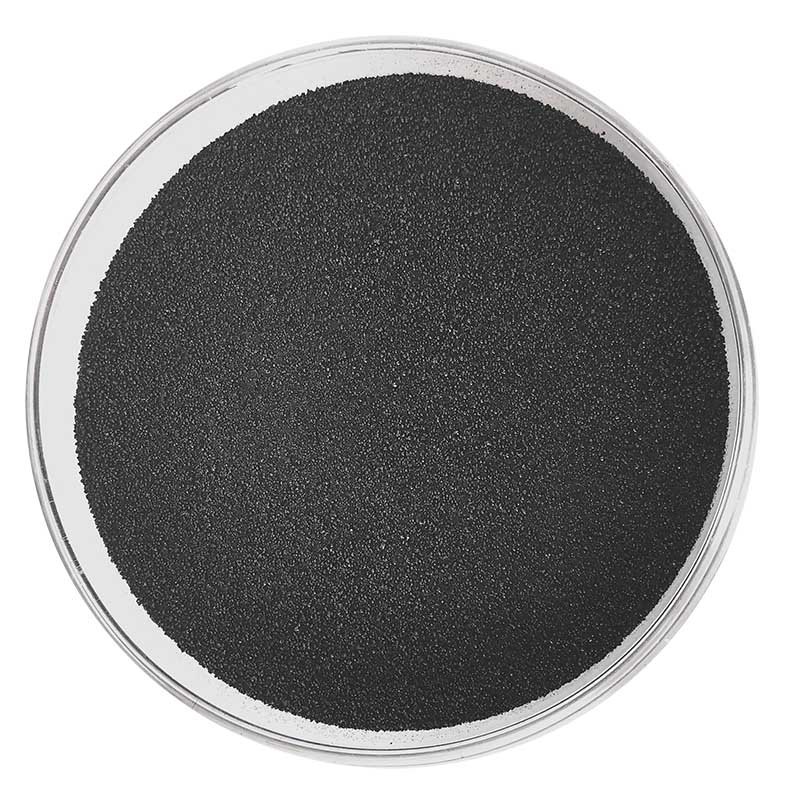
Granules and flakes are both sold as solid seaweed extract, both dissolve completely, and both are delivered in bags. The difference that matters is not appearance — it is how long the material takes to release and where it ends up.
| Declared item | Flake | Granule (Content I / II) |
|---|---|---|
| Alginic acid | ≥ 18% | ≥ 25% / ≥ 35% |
| Organic matter | ≥ 40.0% | ≥ 45.0% / ≥ 45.0% |
| Potassium (K2O) | ≥ 16% | ≥ 20% / ≥ 18% |
| Mannitol | Not declared on this grade | ≥ 1.0% / ≥ 1.0% |
| Natural plant hormones | 300 ppm | 600 ppm / 700 ppm |
| pH | 9.0–11.0 | 9.0–11.0 |
| Solubility | 100% | 100% |
The granule carries more of nearly everything: roughly twice the alginic acid of the flake at Content II, double the hormone concentration at Content I, and a mannitol figure the flake does not declare at all. If the only question were concentration per tonne, the answer would always be granule.
A granule is engineered to dissolve slowly. That is the point of the form, and it cuts both ways. In the root zone, a slower release means the material stays where the roots are for longer instead of being flushed through by the first irrigation — which is why granules give the strongest soil-conditioning effect of the solid forms. In a spray tank, the same property is a liability: a granule needs pre-soaking or long agitation before it will pass a nozzle, and an operator in a hurry will clog the filter.
There is a second, less obvious difference. Because a granule releases over weeks, its effect on the crop is slower to appear and harder to attribute. A flake, fully dissolved in the tank, reaches the leaf in the same pass. For a trial where the result has to be visible inside a single cycle, the flake is easier to defend.
On a per-tonne basis the granule costs more than the flake and carries more alginic acid, so the price difference per kilogram of alginic acid is usually smaller than the headline price difference. The calculation worth doing is: price per tonne divided by the declared alginic percentage, for each grade you are offered. That number, not the bag price, is what should be compared — and it should be done again after freight, because a denser granule occupies less volume per tonne and can be cheaper to ship than an equivalent weight of flake.
Whichever form you choose, pH is 9.0–11.0 and the tank-mixing rules are the same: no acidic actives without a jar test, no high-calcium inputs in the same tank, and add the solid to water rather than water to the solid.
The two product pages are seaweed extract flake and seaweed extract granules. If the choice is still open, the seaweed extract category covers the whole solid range including the fortified variants.
Seadom has manufactured seaweed extract from Quebec Ascophyllum nodosum for more than 35 years and exports to more than 40 countries.