Our Location
Room 1287, Yinzhushan Road,Huangdao, Qingdao, China

Room 1287, Yinzhushan Road,Huangdao, Qingdao, China

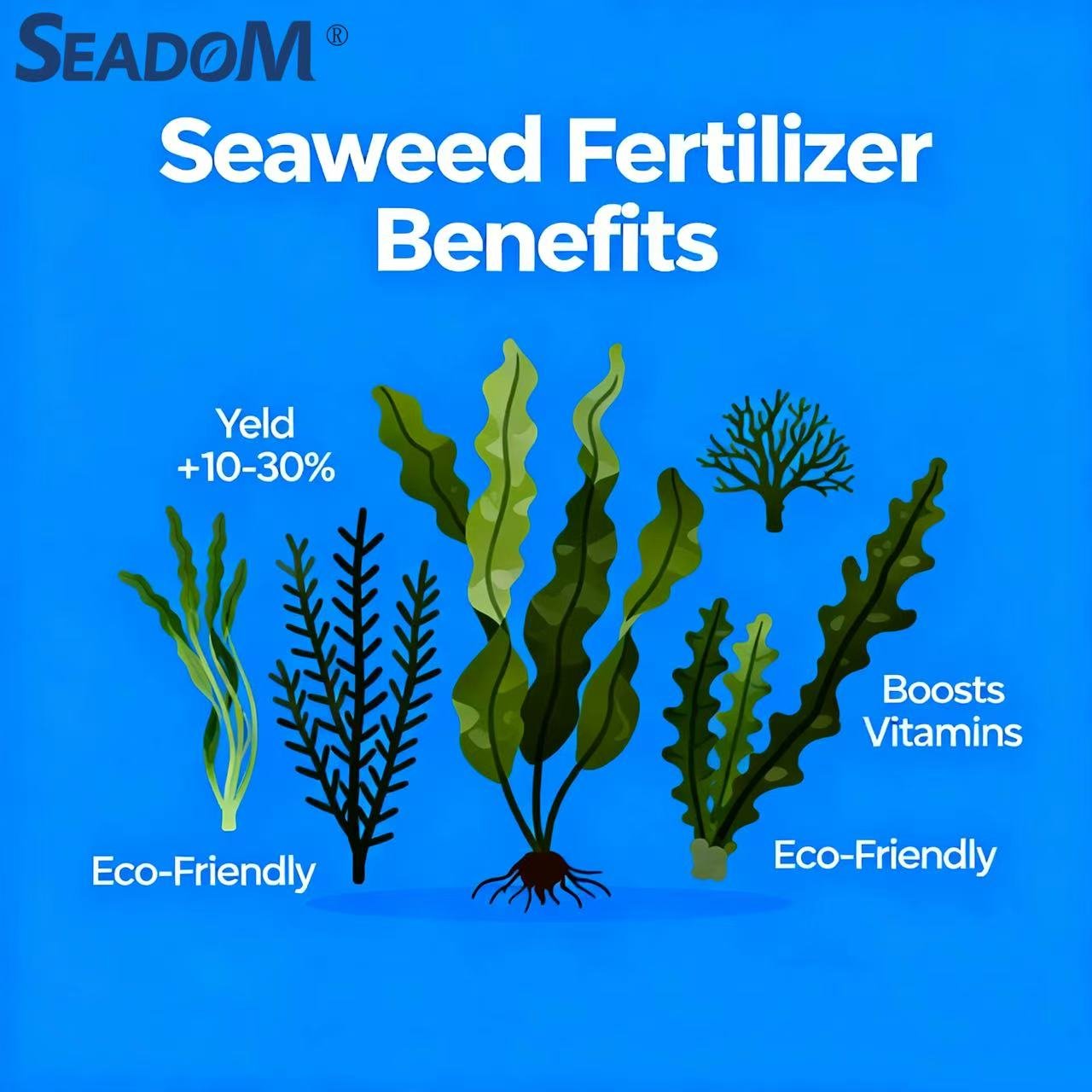
Seaweed extract boosts yields across a wide range of crops. Trials on leafy greens (e.g., romaine lettuce), peppers, sweet potatoes, cucumbers, potatoes, fruits (apples, citrus, pears, grapes, peaches), and grain/oil crops (corn, wheat, rice, soybeans, cotton) plus cash crops (tea, tobacco) show 10%–30% yield increases with seaweed fertilizer use.
Seaweed extract also promotes early flowering and fruiting in many crops (Abetz, 1983; Featonby-Smith, 1987; Arthur, 2003). For example, tomato seedlings treated with seaweed fertilizer flower earlier than untreated controls (Crouch, 1992). Since crop yield is linked to the number of mature flowers, seaweed fertilizer’s ability to stimulate root growth directly supports better flowering.
The science behind it: Yield gains are tied to hormones like cytokinins in seaweed fertilizer (Featonby-Smith, 1983, 1984). In vegetative organs, cytokinins regulate nutrient distribution; in reproductive organs, high cytokinin levels activate nutrient transport—accelerating fruit ripening and nutrient accumulation (Hutton, 1984; Adams-Phillips, 2004; Varga, 1974). This shifts photosynthates from roots, stems, and leaves to developing fruit (Nooden, 1978).
Key trial results:
Seaweed fertilizer is rich in:
These bioactive substances regulate nutrient uptake/transport, stimulate non-specific active factors, and balance endogenous hormones—key to enhancing crop yield and improving fruit/vegetable appearance, color, and flavor.
Trial results on quality:
Nutritional improvements in vegetables:
#SeaweedFertilizer #CropYield #CropQuality #SustainableFarming #AgriculturalScience#SeaweedScience #BioactiveFertilizers #SustainableFarming #CropHealth#SustainableAgriculture#RegenerativeFarming#PlantNutrition#SeaweedFertilizer#GreenTech#Seaweed#Seaweedextract#Biostimulant#QINGDAOSEADOM