Our Location
Room 1287, Yinzhushan Road,Huangdao, Qingdao, China

Room 1287, Yinzhushan Road,Huangdao, Qingdao, China

Director-General QU Dongyu addresses the Ministerial Meeting of the MED9++ Countries and calls for coordinated action to address disruptions threatening food security

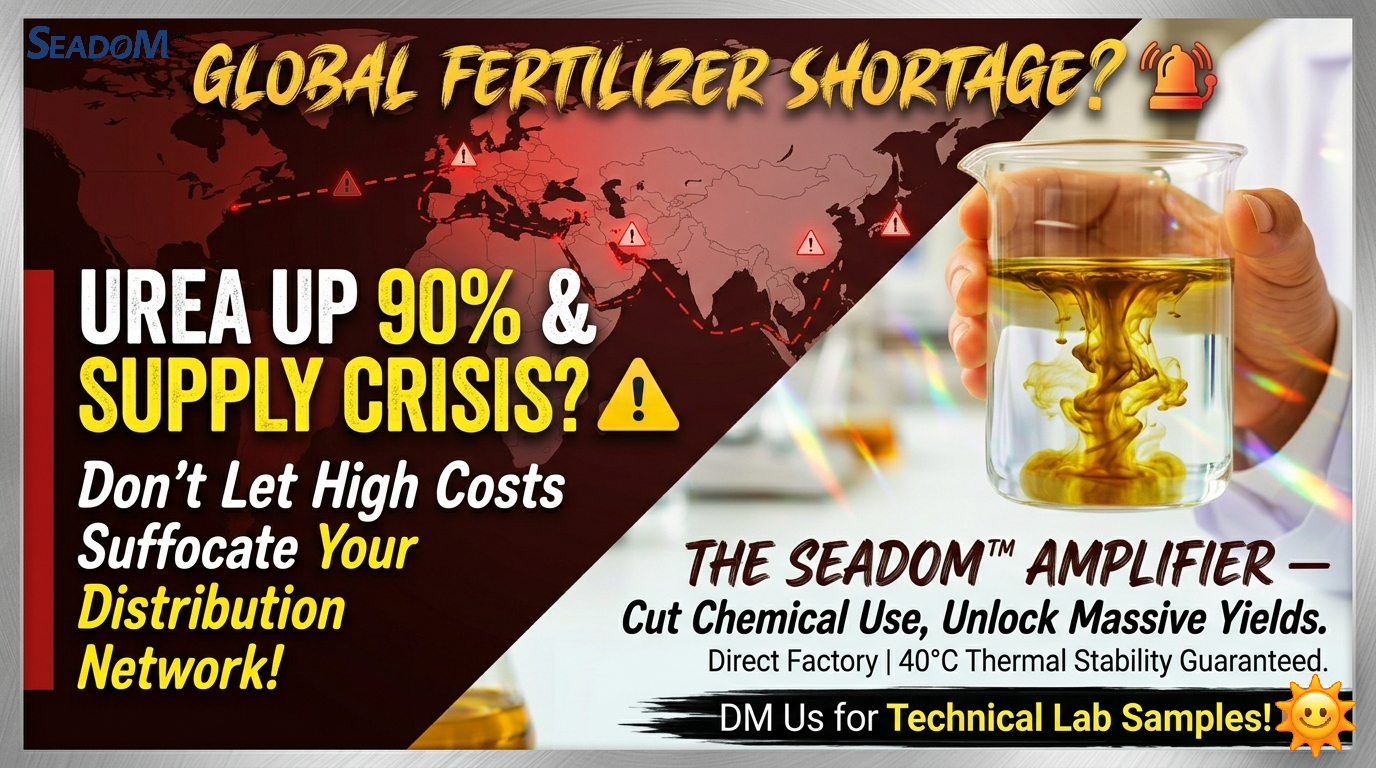
The Food and Agriculture Organization of the United Nations (FAO) has issued a serious alert recently. Shipping disruptions in the Strait of Hormuz have caused widespread fertilizer shortages, logistics bottlenecks and soaring prices of agricultural inputs. This crisis stemming from geopolitical and shipping issues is rippling across the entire agricultural industry chain.
Crops have strict planting and fertilization timetables that cannot be postponed. Late fertilizer deliveries will force farmers to cut down or even stop fertilization, resulting in substantial yield losses. The food supply crunch will last from the second half of 2026 all the way through 2027, posing severe challenges to food security across the globe, especially for regions dependent on imported fertilizers.
Conventional chemical fertilizers rely heavily on global ocean shipping, fossil fuels and centralized production and transportation networks. Such rigid supply chains are extremely vulnerable to disruptions of key shipping routes. Against this backdrop, it has become an urgent task for global farmers to adopt alternative agricultural products that feature stable supply, low carbon footprint and reliable performance. Our natural seaweed extract stands out as an ideal solution to tackle the fertilizer crisis and safeguard agricultural production and food supply.
Traditional bulk fertilizers feature highly concentrated raw material production, processing and transportation, which largely depend on major ocean lanes like the Strait of Hormuz. The long supply chain lacks resilience, and local disruptions will quickly evolve into global supply and demand imbalance.
Our seaweed extract is made from premium Ascophyllum nodosum sourced through diversified procurement channels. With well-distributed production bases and flexible logistics routes, our products never rely on a single shipping corridor. From raw material harvesting and deep processing to final delivery, the whole supply chain operates independently and stably. We effectively avoid the risks of supply suspension and price hikes caused by shipping disruptions, ensuring continuous and sufficient supply of high-quality agricultural inputs for farmers worldwide all year round.
Fertilization must be completed within specific growth stages of crops, and any delay will directly affect final outputs. Rich in natural plant growth regulators, amino acids, trace elements and active algal substances, our seaweed extract boasts outstanding solubility and absorption efficiency.
Different from conventional fertilizers that take time to take effect, our product can be rapidly absorbed by crop roots, stems and leaves. It works well even when applied within a relatively short time frame, fully exerting nutritional effects and stimulating healthy crop growth. It effectively offsets the negative impacts of insufficient or delayed chemical fertilizer application, guarantees normal growth of crops at critical stages, and stabilizes yields and quality amid the current fertilizer shortage.
Conventional chemical fertilizers consume massive fossil fuels during production and transportation, pushing up costs and aggravating resource pressure. In line with FAO’s long-term initiative to transform global agri-food systems, our seaweed extract is a pure natural bio-stimulant.
It is eco-friendly, pollution-free and compatible with various farming models. When used alone or combined with a reduced amount of chemical fertilizers, it can significantly improve soil vitality, enhance crop stress resistance and optimize the farmland ecological environment. By adopting our seaweed extract, farmers can cut reliance on fossil fuel-derived fertilizers, lower overall farming costs, and move towards greener, more sustainable agricultural development — a practical step to build long-term resilience for global food systems.
African, Asian and Middle Eastern countries that rely heavily on fertilizer imports are most vulnerable to the current crisis. Our seaweed extract is suitable for nearly all types of crops and growing environments. It adapts to diverse climates, soil conditions and farming scales, delivering consistent effects for smallholder farms and large-scale plantations alike.
We provide targeted solutions for regions facing food insecurity, economic fragility and climate shocks. With stable supply and excellent cost-performance, our product helps local farmers get through the fertilizer shortage and maintain stable food production.
The global fertilizer crisis has exposed the fragility of traditional agricultural supply chains. As a natural, efficient and supply-stable agricultural input, our seaweed extract not only addresses the immediate problems caused by shipping disruptions and fertilizer shortages, but also conforms to the global trend of sustainable agriculture.
We will keep supplying high-quality seaweed extract products worldwide, support farmers in overcoming agricultural challenges, and work with all parties to safeguard global food security and build a more resilient, sustainable future for the agri-food industry.
#SeaweedExtract #NaturalFertilizer #StraitOfHormuzCrisis #GlobalFertilizerShortage #BioStimulant #SustainableAgriculture #FoodSecurity #CropYieldBoost #OrganicAgriculture #AgriculturalInput #AscophyllumNodosum #FertilizerAlternative