Our Location
Room 1287, Yinzhushan Road,Huangdao, Qingdao, China

Room 1287, Yinzhushan Road,Huangdao, Qingdao, China

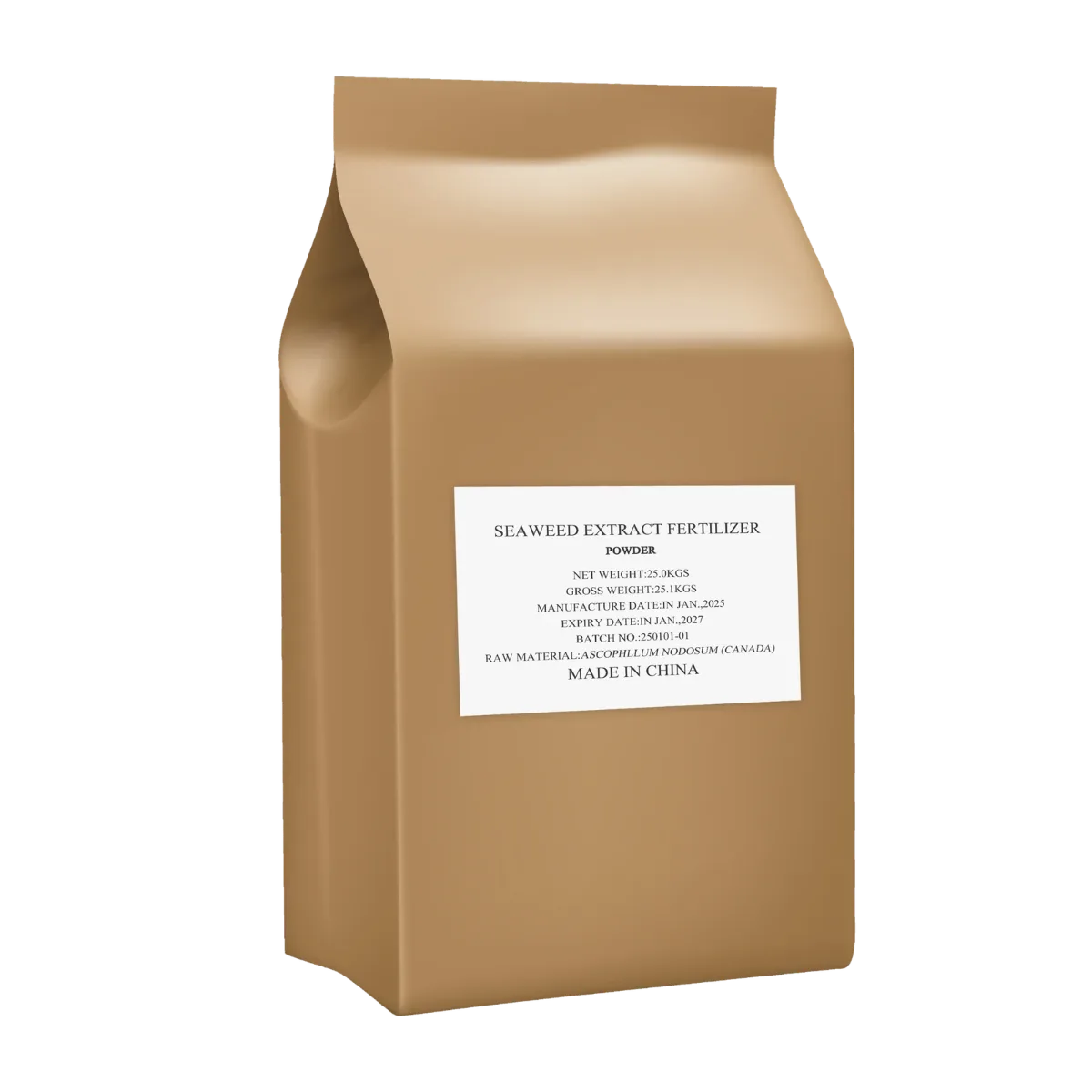
Seaweed extract is one of the few agricultural inputs that acts on two fronts at once: it supplies a small amount of highly available nutrition, and it changes how the plant copes with stress. For growers, importers and formulators evaluating it, the useful questions are narrower than most marketing pages suggest — what is actually in the drum, what it does at realistic rates, and how to tell a good batch from a poor one.
Commercial seaweed extract is the water-soluble fraction of a brown alga, released by breaking down the cell wall chemically or enzymatically. It is not dried seaweed meal, and it is not raw kelp. The distinction matters commercially: meal delivers fibre and minerals but almost no intact bioactive fraction, while a properly made extract delivers the low-molecular-weight compounds — mannitol, betaines, free amino acids, polysaccharide fragments and hormone precursors — that produce the physiological response growers pay for.
The species matters as much as the process. Ascophyllum nodosum from the cold North Atlantic is the reference raw material for biostimulants, largely because of its betaine and mannitol content and the density of its beds. Seadom works from Ascophyllum nodosum harvested on the Canadian side of the North Atlantic and breaks the cell wall enzymatically rather than with hot alkali, which keeps more of the heat-sensitive fraction intact. The extraction route is what separates two products with the same species name on the label.
| Fraction | What it is | Effect in the field |
|---|---|---|
| Alginate and fucoidan | cell-wall polysaccharides | binds soil particles into aggregates; leaves a thin moisture-retaining film on the leaf surface |
| Mannitol | sugar alcohol | osmotic adjustment; supports recovery after heat, drought or transplant shock |
| Betaines | quaternary ammonium compounds | helps the plant hold chlorophyll and turgor under salinity and drought |
| Cytokinins and auxin-like compounds | hormone fraction | cell division and root initiation; supports bud break, flowering and fruit set |
| Free amino acids and short peptides | protein fragments | rapidly available nitrogen; chelates micronutrients for uptake |
| K, Ca, Mg, Fe, Zn, Mn, I | mineral fraction | supplemental micro-nutrition — a top-up, not a fertiliser programme |
Extract earns its place at specific points in the cycle rather than across the whole season. The clearest and most consistent effects reported by growers sit in four windows: rooting and transplant establishment, flowering and fruit set, heat or cold stress events, and recovery after harvest or pruning. Applied inside those windows, the response is visible; applied at random through the season, it is hard to distinguish from noise.
It is also not a substitute for a base fertiliser. Seaweed extract changes stress tolerance, root architecture and nutrient-use efficiency. It does not supply the nitrogen, phosphorus and potassium a crop removes at harvest. Programmes that treat it as a replacement usually end up disappointed, and programmes that stack it on top of an already adequate NPK base see the benefit.
Dilution is formulation-specific. The declared application rate on the label or the batch COA governs; using rates copied from a different grade is one of the most common causes of either no response or leaf burn. Our application rate guide works through the arithmetic of grams per hectare versus grams per litre, and explains why the two numbers are so often confused.
A supplier who can answer those five points with documents is a supplier you can build a formulation on. One who answers with adjectives is not.
Related reading: Seaweed Fertilizer Active Ingredients | Powder vs Liquid Seaweed Extract | Overview of Seaweed Fertilizers | Applications in Modern Agriculture