Our Location
Room 1287, Yinzhushan Road,Huangdao, Qingdao, China

Room 1287, Yinzhushan Road,Huangdao, Qingdao, China

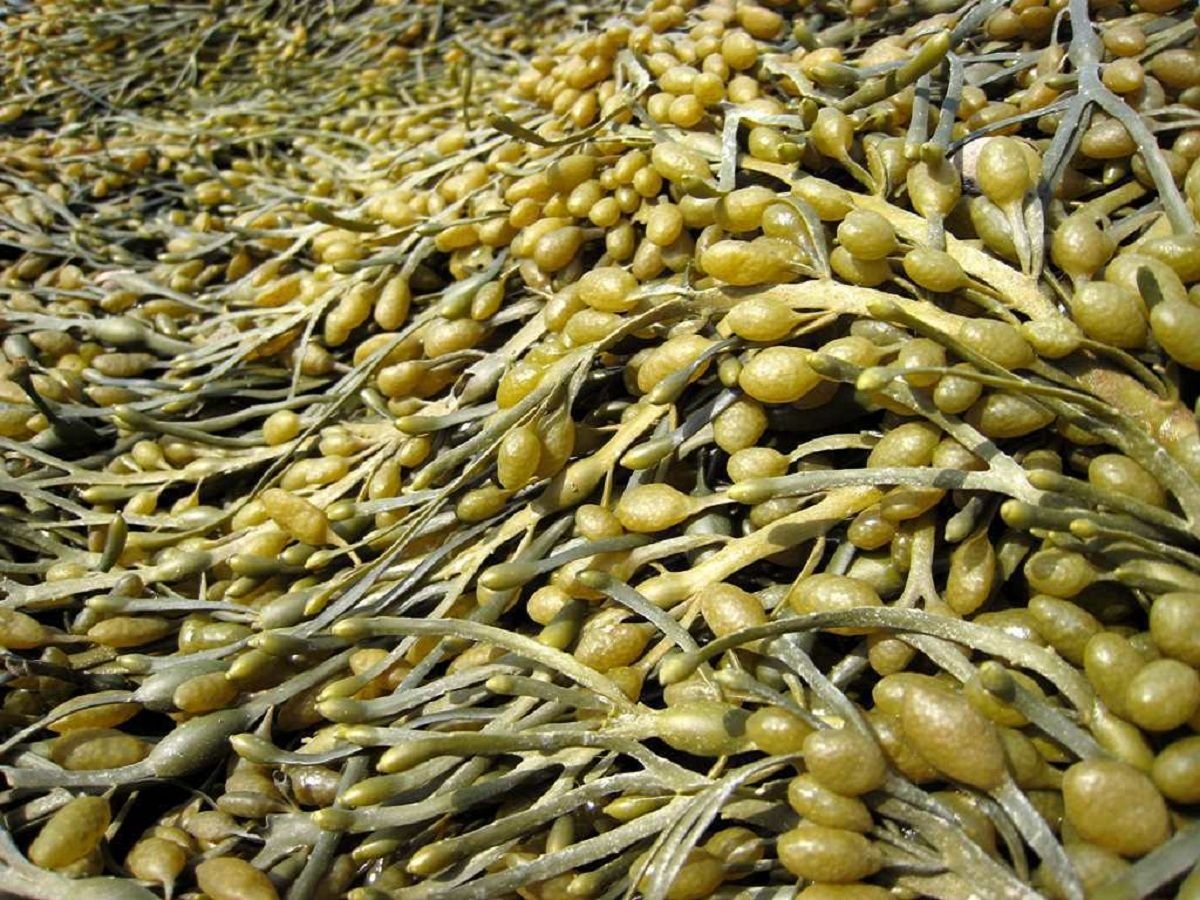
Ascophyllum nodosum is the species most biostimulant manufacturers name on the label, and for once the marketing has a basis. It is abundant, well studied, and its composition happens to suit the fractions the industry values. It is also slow growing and tightly regulated to harvest, which is why the origin of the biomass matters as much as the species.
A brown alga of the order Fucales, family Fucaceae. Its range runs along the North Atlantic — from Arctic Canada, Greenland and northern Norway down through Iceland, Ireland, Scotland and England to northern Portugal. It dominates the mid-intertidal zone on sheltered rocky shores, where it can form a near-continuous canopy at low tide, and it is largely absent from wave-exposed coasts, which is one reason its biomass is concentrated in relatively few, well-mapped beds.
Growth is slow by algal standards: roughly 30 to 40 centimetres a year. Individual plants persist for decades, which makes the resource renewable but not quickly replaceable — the reason harvest is quota-managed rather than open.
There is no holdfast in the usual sense. The plant attaches by a broad disc and then produces long, strap-like fronds that branch dichotomously, with a single egg-shaped vesicle at intervals along the frond providing buoyancy. In spring the receptacles — the reproductive structures — swell at the tips and are visible from the shore. Fronds can exceed two metres and lie flat over one another at low water, which is what gives the beds their characteristic matted appearance.
Two harvesting models dominate, and they produce different products.
Both systems are quota-based, and reputable suppliers can state which one their biomass comes from. That traceability is the part of “sustainable” that can actually be verified.
Published figures vary with season, site and drying method, but the broad picture is consistent.
| Fraction | Typical share | Function in the plant and in the product |
|---|---|---|
| Alginate | about 25–30% of dry weight | structural polysaccharide; soil aggregation and film-forming on the leaf |
| Mannitol | single-digit to low double-digit % | osmotic adjustment; the fraction most sensitive to heat during processing |
| Fucoidan and laminarin | several % | storage and defence polysaccharides; elicitor activity |
| Betaines | low single-digit % | chlorophyll and turgor retention under salinity and drought |
| Crude protein and free amino acids | around 5–10% | available nitrogen; chelation of micronutrients |
| Potassium, iodine, trace elements | variable | supplemental nutrition |
Three reasons, in order of weight. First, betaine content: the compound that helps plants hold chlorophyll under stress is present in useful quantity, and it survives processing if the process is gentle. Second, biomass density: the beds are productive enough to supply industrial volumes from a monitored resource. Third, a long research record — more independent trial work exists on this species than on any of its competitors, which makes it the safe choice for a formulator who has to defend a claim.
Seadom breaks the cell wall enzymatically for exactly this reason: the point of buying Ascophyllum nodosum is the fraction that a harsh process destroys.
Species and origin; hydrolysis route; solids content; pH; alginate; mannitol; free amino acids; K2O and sodium; heavy metals including arsenic; microbiological status; and the production date of the specific lot. A datasheet that carries all of those, and a supplier who will send a fresh one with each shipment, is worth more than a lower price per tonne with a generic sheet attached.
Demand for well-documented raw material keeps rising: industry estimates compiled in a World Bank–TNC guide put the seaweed biostimulant market above $1.4 billion in 2024, on track toward $2.4 billion by 2030. World Bank – TNC seaweed biostimulant guide (PDF)
Related reading: Sargassum: The Rising Star for Seaweed Fertilizers | Ecklonia Maxima & Durvillaea Potatorum | Enteromorpha (Green Algae) | Seaweed Processing Technologies